
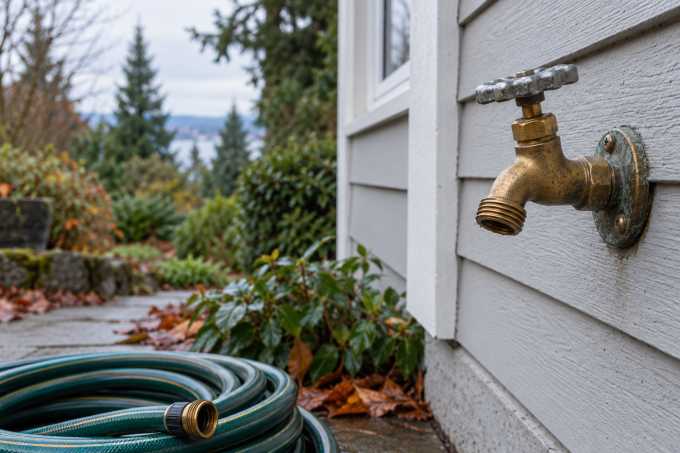
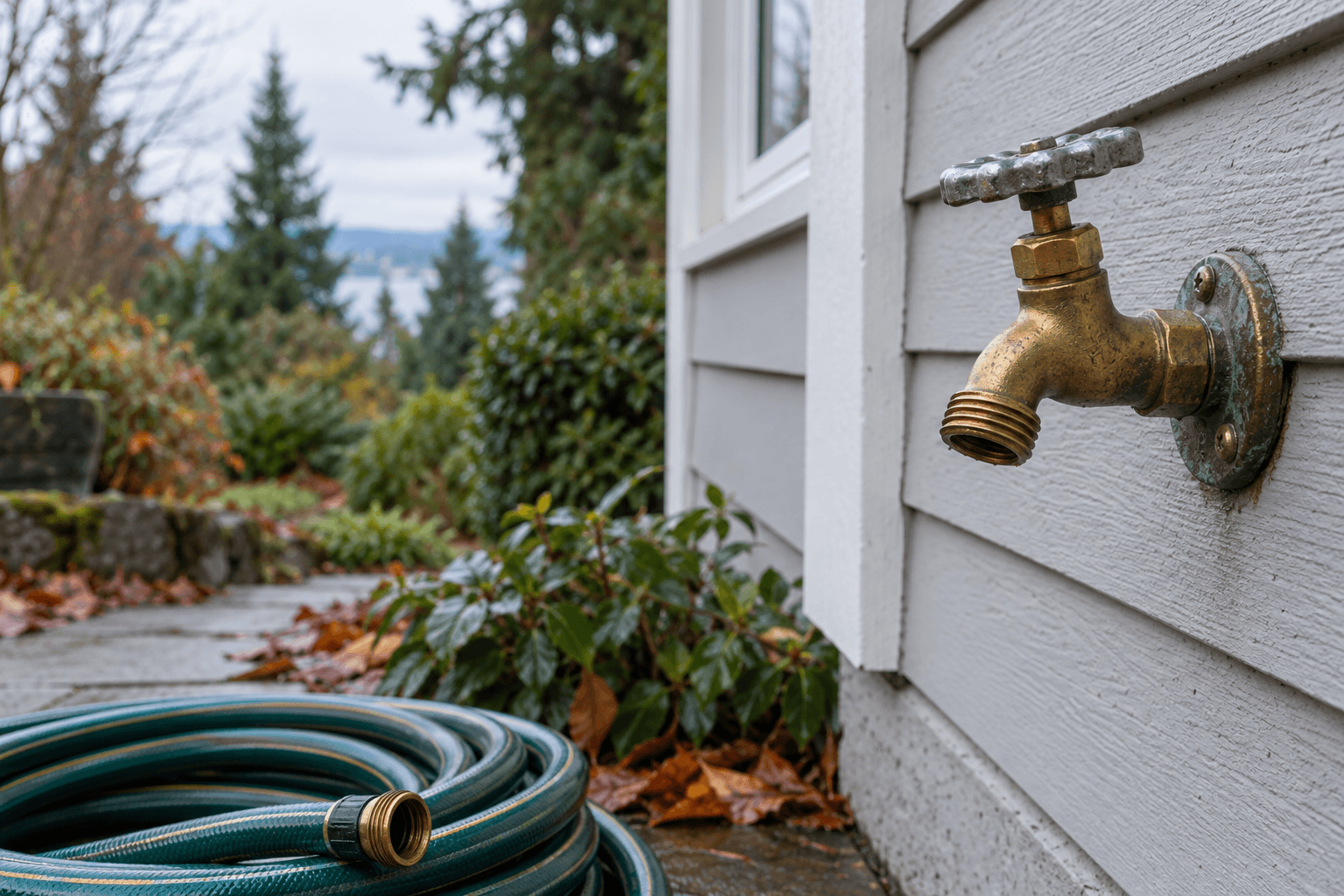
How to Winterize Outdoor Faucets in Vancouver
To winterize a standard outdoor faucet, disconnect the hose, close the indoor shut-off valve supplying the tap, then open the outdoor faucet to drain the line. A self-draining frost-free faucet works differently: its outdoor handle normally needs to be closed so it can drain.
Before starting, identify which type you have. This guide explains the differences, when to prepare your taps for Vancouver’s colder weather and when to call a plumber.
When Should You Winterize Outdoor Taps in Vancouver?
Prepare your outdoor taps before the first forecast frost or freezing overnight temperatures. Don’t wait for snow.
Vancouver’s mild afternoons can make winter preparation easy to overlook, but overnight cold can still put outdoor plumbing at risk. The City of Port Coquitlam’s winter preparation guidance recommends disconnecting hoses and shutting off and draining applicable outdoor taps before frost.
Make outdoor tap maintenance part of your fall home checklist, particularly before leaving your property unattended.
How Do You Know Whether Your Outdoor Faucet Is Frost-Free?
A standard outdoor faucet shuts off water near the outside handle. A frost-free model places its shut-off mechanism farther inside the building, where indoor heat helps protect it. Its exposed barrel drains when the faucet is correctly installed and closed.
Look for a manufacturer name or model number on the fixture, then check the manufacturer’s instructions. The outside appearance alone may not confirm the type or whether it was installed correctly.
If you cannot identify the faucet, ask a plumber to check it before choosing a winterizing procedure.
How Do You Winterize a Standard Outdoor Faucet?
The following steps apply to a conventional hose bib with a separate indoor shut-off valve.
1. Disconnect and Drain Your Garden Hose
Remove the garden hose and removable watering accessories, such as timers and splitters. Drain the hose before putting it away in a sheltered storage area.
Remove the hose from the faucet, not the faucet from the wall. Leaving a hose connected can trap water and prevent proper drainage.
2. Find the Indoor Shut-Off Valve
Locate the valve on the pipe feeding the outdoor tap. Check accessible areas such as the basement, crawl space or mechanical room, particularly near where the pipe passes through the exterior wall.
If you have several outdoor taps, identify the supply valve for each. Do not assume every tap has its own valve or that one valve controls them all.
3. Turn Off the Outdoor Tap’s Water Supply
Close the dedicated indoor shut-off valve.
Do not force a valve that is seized or badly corroded. If it leaks when operated or does not stop the supply, have a plumber assess it.
4. Open the Outdoor Tap and Let It Drain
After closing the indoor supply valve, open the outdoor faucet and allow the remaining water to drain.
If water continues flowing rather than stopping after the line drains, the valve may not be closing properly, or it may supply a different fixture. Arrange a plumbing inspection.
Some installations have an additional drain or bleeder on the indoor valve. Follow the instructions for that valve or ask a plumber whether further drainage is needed.
5. Check Every Outdoor Tap
Walk around the front, back and sides of your home. Repeat the process for each applicable tap and make sure no hoses remain attached.
Should You Leave Your Outdoor Faucet Open or Closed in Winter?
It depends on the faucet and how its supply is isolated.
- Standard outdoor tap: With its indoor supply shut off and the line drained, leave the outdoor tap open while the indoor supply remains closed.
- Conventional self-draining frost-free faucet: Close the outdoor handle, remove the hose and allow the faucet to drain. Follow its manufacturer’s instructions.
Do not leave an outdoor tap running as a winterizing method. Confirm your setup if you are unsure which instruction applies.
What If You Don’t Have an Indoor Shut-Off Valve?
The next step depends on your faucet type and installation.
A correctly installed self-draining frost-free faucet may be designed to drain without a separate indoor isolation valve. Check its manufacturer’s instructions.
If you have a standard faucet and cannot locate an indoor shut-off, arrange an assessment through our Vancouver plumbing services. We can check the faucet and supply arrangement and recommend how to prepare it for freezing weather.
Simply closing the outside handle does not establish that the exposed plumbing is empty. An inspection can help determine whether adding an accessible isolation valve or replacing the faucet would be appropriate.
Is an Insulated Outdoor Faucet Cover Enough?
Treat a cover as additional protection, rather than a replacement for the correct winterizing procedure.
The City of Surrey’s frozen water line guidance identifies outdoor tap covers as a protective measure and also recommends shutting off outdoor taps and draining their lines.
A cover does not resolve trapped water, a leaking shut-off valve or a frost-free faucet installed at an angle that prevents drainage.
Can a Frost-Free Faucet Still Freeze?
Yes. A conventional frost-free faucet can freeze if water remains trapped inside it.
Woodford’s guide to how frost-proof faucets work (PDF) explains how an attached hose or incorrect installation can prevent drainage and lead to a split faucet barrel.
Disconnect hoses before freezing weather and follow the instructions for your specific model. “Frost-free” depends on correct installation and use.
What Should You Do If Your Outdoor Tap Is Already Frozen?
Shut off the supply to the affected line if you can safely identify and operate its valve. Never use a torch or open flame to thaw the faucet. Contact a plumber if you notice leaks, cannot isolate the line or are unsure how to proceed.
If a pipe has burst, turn off your home’s main water supply if it is safe to do so and call for help. Drips & Drains provides 24/7 emergency plumbing in Vancouver for urgent problems including burst pipes, serious leaks and frozen pipes.
Check for leaks when you restore outdoor water use in spring. A split frost-free faucet barrel may not reveal damage until the tap is turned on again.
Need Help Winterizing Outdoor Faucets in Vancouver?
Cannot find your shut-off valve? Unsure which type of hose bib you have? Drips & Drains can assess your outdoor plumbing and recommend the next steps.
Request an outdoor faucet assessment or call 604-355-7322 for help preparing your outdoor taps for winter.